
Commercial Table Systems Built to Last
AEONTI Provides Complete Table Systems Designed for Commercial Spaces.
Home / All / Wholesalers & Distributors / Australian Wholesaler's Cast Iron vs Steel Table Base Selection Guide for Restaurant Clients
Australian Wholesaler's Cast Iron vs Steel Table Base Selection Guide for Restaurant Clients
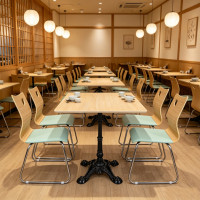
Australian Wholesaler's Cast Iron vs Steel Table Base Selection Guide for Restaurant Clients
The Challenge
Hospitality Supplies Melbourne had been selling table bases to restaurants for over a decade. But their sales team consistently faced the same question: "Should I choose cast iron or steel?" Without a clear answer, they defaulted to recommending steel—it was cheaper and easier to sell.
The problem emerged years later when restaurant clients returned with complaints. Steel bases in high-traffic fast-casual restaurants showed significant wear within 3-4 years. Coatings chipped, rust appeared, and tables became wobbly. Clients were unhappy, and the wholesaler's reputation suffered.
"We were solving short-term price objections but creating long-term problems," the sales director admitted. "We needed a framework to help clients make better decisions—and to protect our own reputation."
The Solution
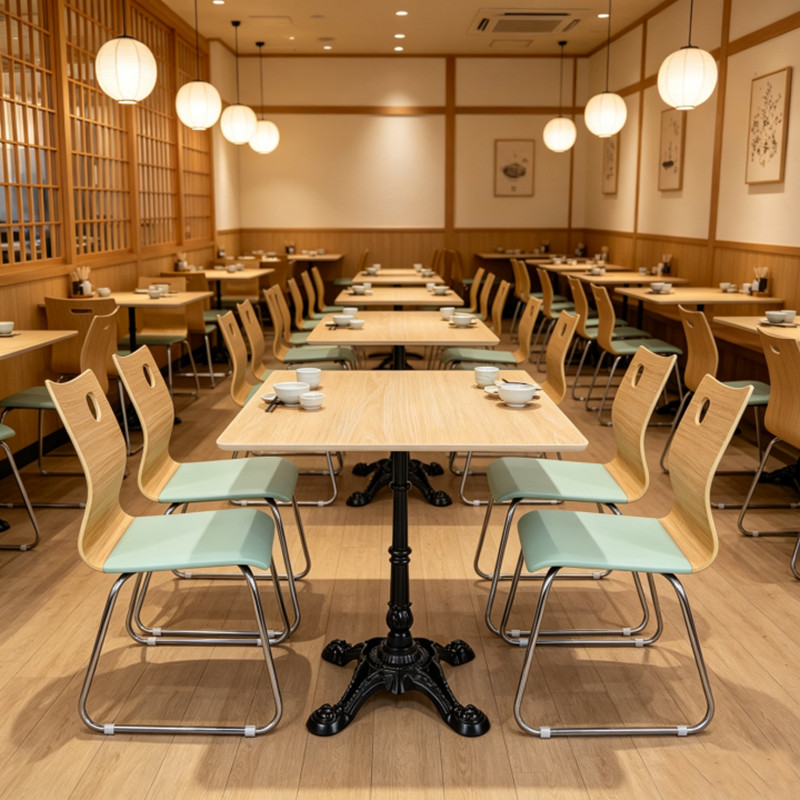
AEONTI conducted a detailed lifecycle cost analysis comparing cast iron and steel table bases over a 10-year period. The analysis covered three common restaurant scenarios:
Scenario 1: Fast-Casual Restaurant (High Traffic, 16 hours/day)
Cast iron: $7,200–9,400 total cost over 10 years for 20 tables
Steel: $8,400–11,600 total cost over 10 years for 20 tables
Conclusion: Cast iron provides 15-20% lower total cost
Scenario 2: Fine Dining (Moderate Traffic, 8 hours/day)
Cost parity: Both materials ~$360–480 per table over 10 years
Conclusion: Selection based on aesthetics and vibration dampening
Scenario 3: Outdoor/Patio (Weather Exposure)
Cast iron: $4,000–5,500 total cost over 10 years for 10 tables
Steel: $5,200–7,000 total cost over 10 years for 10 tables
Conclusion: Cast iron significantly outperforms in outdoor applications
Key material properties were also documented:
Cast iron: Lower density (7.2 vs 7.85 g/cm³), superior vibration dampening, 15-20 year lifespan
Steel: Higher tensile strength, better weldability, 5-8 year lifespan
The Results
The wholesaler integrated the lifecycle cost framework into their sales training program. Within six months:
Client retention improved 25%: Clients appreciated the data-driven guidance
Average order value increased 18%: Cast iron orders carried higher margins
Complaints reduced 60%: Fewer clients returned with premature wear issues
Sales confidence improved: Sales team could now articulate long-term value
"This framework changed how we sell," the sales director said. "We're no longer just moving boxes—we're advising clients on investments that last 15-20 years."
Need a Similar Solution for Your Business?
AEONTI specializes in commercial table bases, and complementary tabletops and chairs for wholesalers, contractors, and brand owners worldwide.
📩 Send an inquiry → [Contact Us Form]
💬 WhatsApp → [+86 17841353079]
📧 Email →[ aeonti@aeonti.com]
Are you looking for a reliable manufacturer?
We can quickly provide customers with market analysis, technical support and customized services.Commercial Table Systems Built to Last
AEONTI Provides Complete Table Systems Designed for Commercial Spaces.