What Do Restaurant Customers Notice About a Table Without Realizing It?
What Do Restaurant Customers Notice About a Table Without Realizing It?
Guests rarely say, "That is a well-engineered table base." They almost never inspect the material, the welding, or the thickness of the base plate. Yet they feel — instantly and silently — whether a table is comfortable, steady, gets in the way of their legs, or is easy to move.
For restaurant owners, furniture distributors and hotel project buyers, that gap is exactly where the risk sits. What shapes the dining experience is often not the most visible design, but the details customers never put into words.
1. Guests Know Immediately If a Table Wobbles
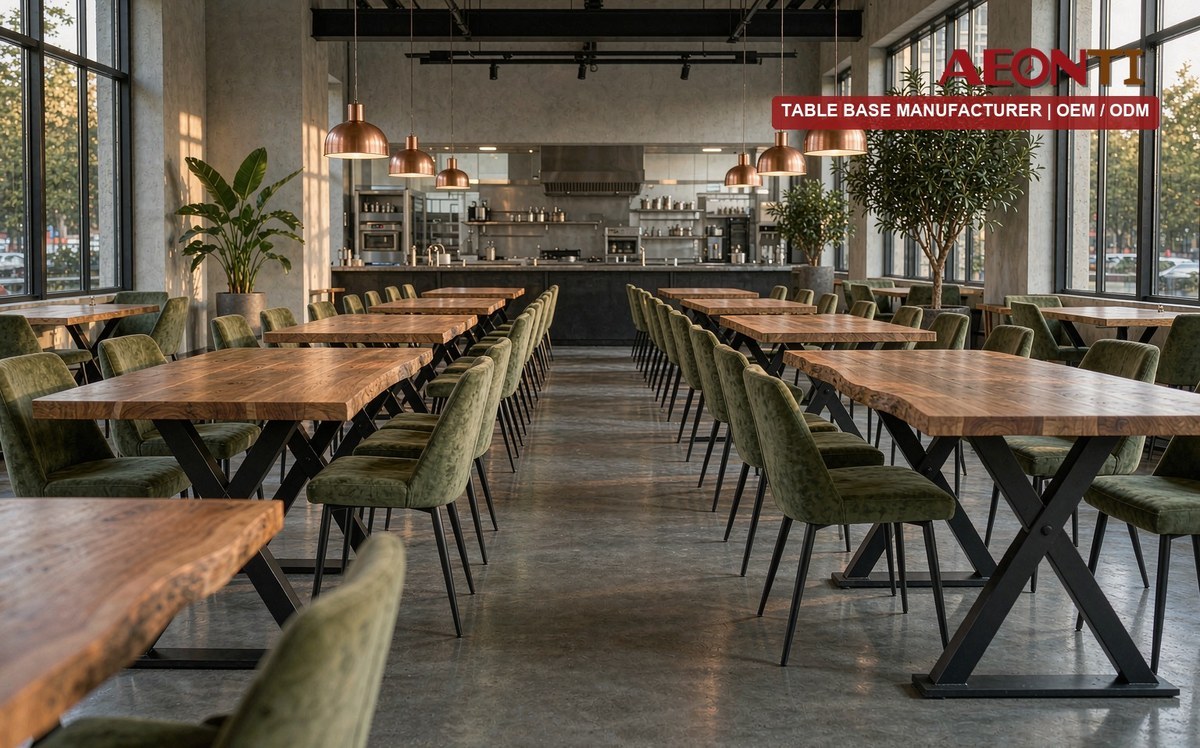
Customers may never say, "This table base lacks rigidity." But if they rest a hand on the tabletop and it moves even slightly, they will feel it — every time.
- A coffee cup is set down and the top trembles.
- A steak is cut and the table shifts a little.
- Several people use the same table and it rocks.
- A light bump sends the top swaying.
Each issue seems small on its own, but together they quietly erode the meal. For restaurant procurement, stability is not a bonus feature — it is the baseline. That is why a dining table should never be judged by its tabletop alone. The commercial table base underneath is what actually decides whether the table holds steady.
| What the guest feels | What they never say | What the buyer must check |
|---|---|---|
| The top trembles | "The table base is not rigid." | Base plate size, tube gauge and welding of the table base |
| The table shifts while eating | "The table base does not fit this tabletop." | Matching the table base to top size and weight |
| Knees touch underneath | "The table base layout is wrong." | Legroom around the central column or pedestal |
| The finish looks tired | "The surface treatment failed." | Coating system suitable for the actual environment |
2. They Ignore the Base, but They Notice Whether Their Legs Fit
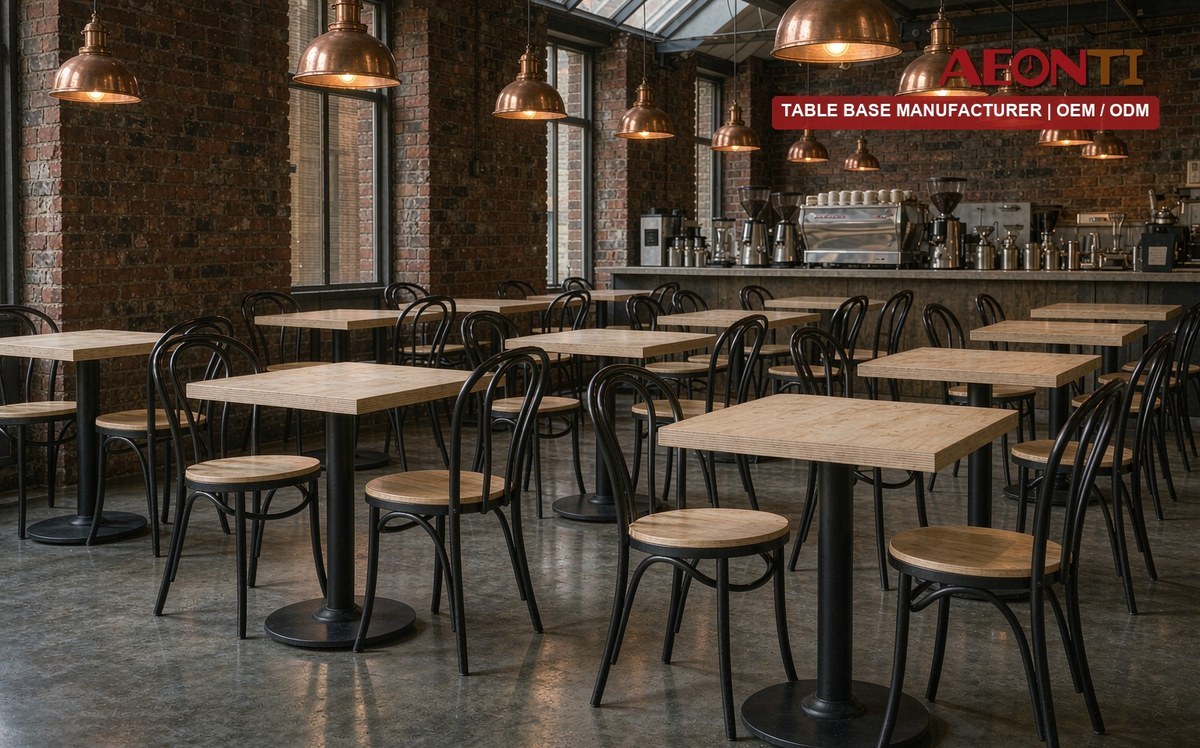
This is one of the most overlooked details in commercial furniture. Once seated, customers rarely look under the table — but they do move their legs naturally. If the table base sits in the wrong place, the consequences are immediate:
- Knees knock against the table base.
- Feet have nowhere comfortable to go.
- Two diners interfere with each other’s legs.
- The chair cannot be pushed properly under the table.
- Guests keep shifting position to get comfortable.
They will not tell the server, "The table base structure is poorly planned." They are far more likely to think, "This seat is not very comfortable." And that is one of the most important principles in commercial table design:
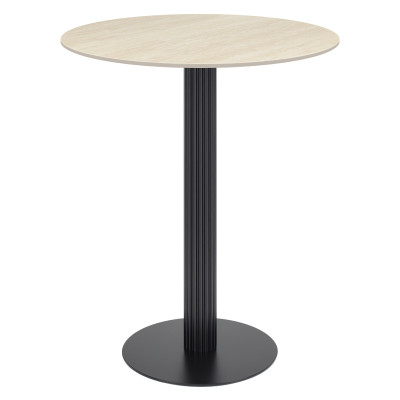
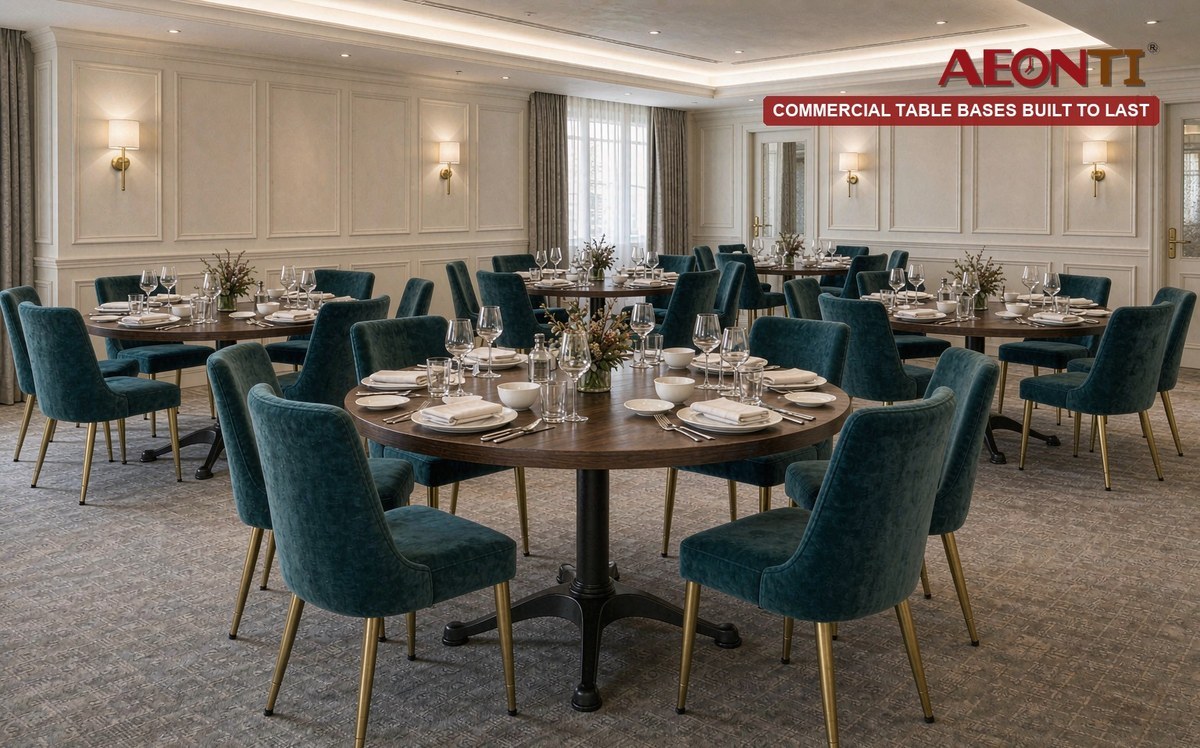
It should hold the top steady while giving guests’ legs as much freedom as possible. Explore café table systems designed around that balance.
3. A Shaky Table Can Cost More Prestige Than a Plain Look
Buyers often start with colour, material, shape and the grain of the tabletop. Of course those matter. But a beautiful dining table that rocks during use loses its premium feeling very quickly.
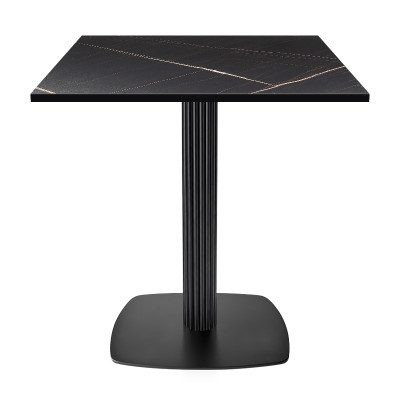
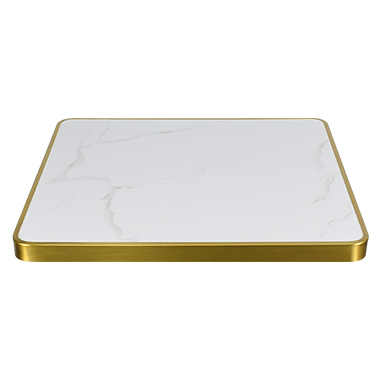
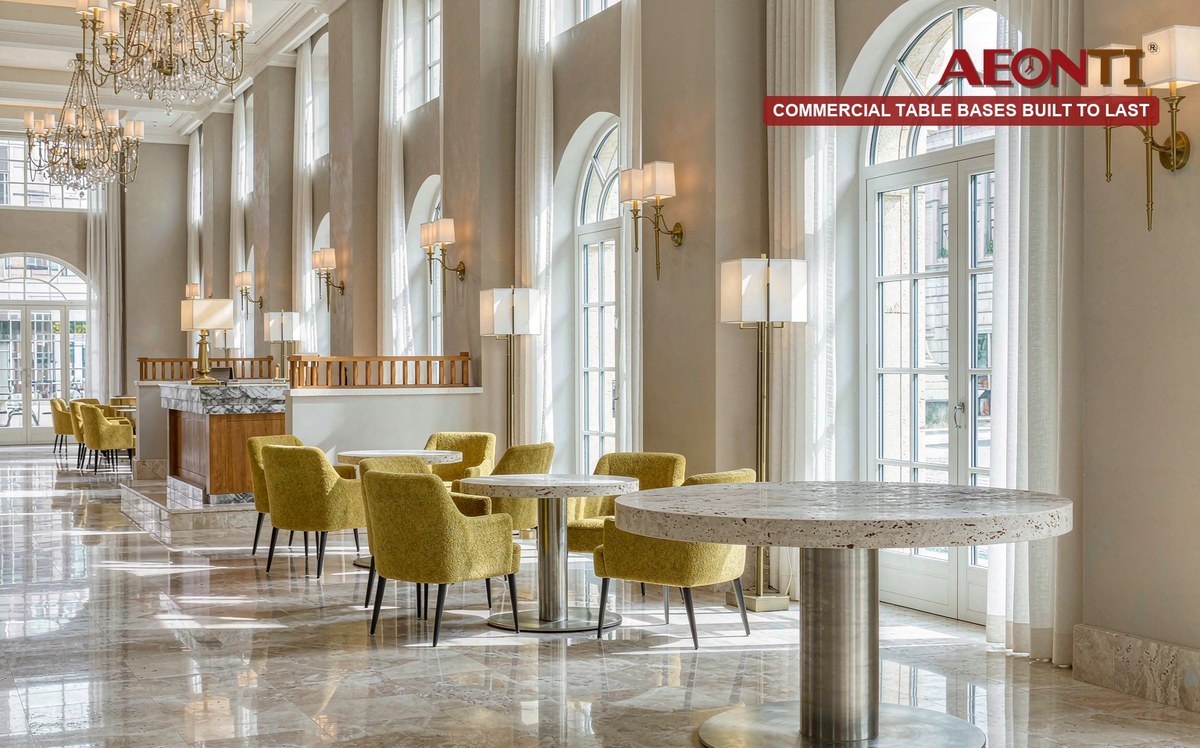
Picture a high-end restaurant with marble-look tops, elegant chairs and refined lighting. A guest sits down, touches the table — and it wobbles. The premium atmosphere can break in that single second. This is why commercial table sourcing cannot be an appearance-only exercise. A genuinely good product has to solve four things at once:
See how one base platform serves different settings in our fine dining table system solutions.
4. The Wrong Table Size Makes Guests Feel Crowded
How large should a dining table be? It is not simply a case of "bigger is better."
If the top is too small: tableware feels cramped, dishes have nowhere to sit, and diners bump into one another. If the top is too large: space efficiency drops, guests sit too far apart, and staff find it harder to move and serve.
For restaurants, cafés, hotels and commercial projects, the right size has to balance seat count, space efficiency, the structure of the table base, tabletop weight and the actual usage scenario. So instead of asking only, "What does this table cost?" a better question is, "What kind of commercial space is this table really for?"
| Typical setting | Tabletop direction | Recommended table base | Key reason |
|---|---|---|---|
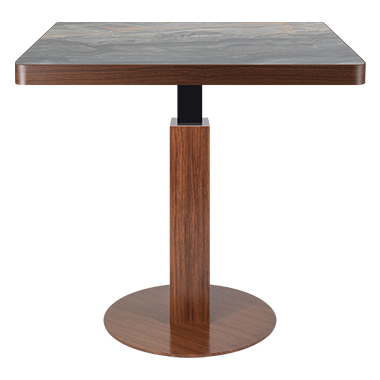
| Fine dining | Walnut or stone, 2–4 seats | Cast iron table base or pedestal | Steady feel with clear legroom |
| Café / coffee bar | Compact square or round top | Disc pedestal table base | Fits tight floor plans |
| Hotel lounge | Round stone top | Stainless steel pedestal table base | Premium look, stable centre |
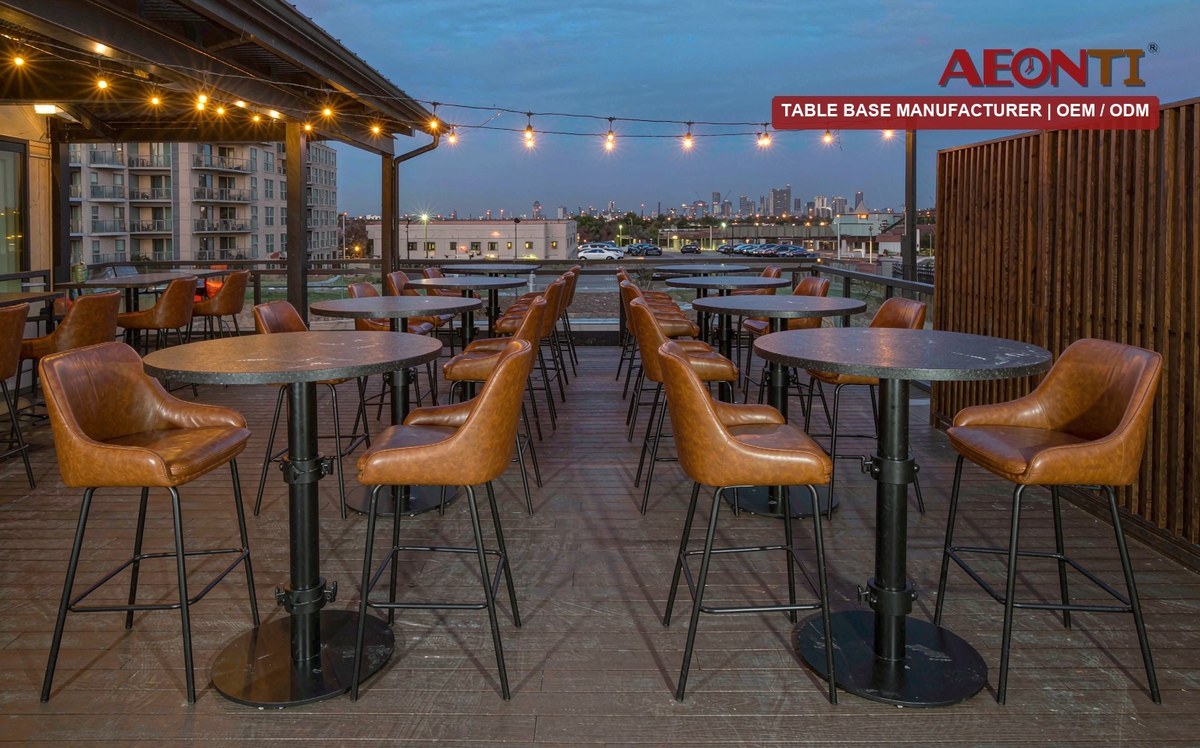
| Rooftop / patio | Bar-height round top | Weighted pedestal table base | Resists bumps and wind |
5. A Bigger Table Base Does Not Automatically Mean a Steadier Table
One common misconception: a heavier table base and a larger foot must be more stable. In reality, stability is the result of many factors working together:
- Base plate size
- Material and tube specification
- Structural design
- Welding quality
- Installation method
- Tabletop size and weight
- The environment it is used in
A large dining table paired with a mismatched base can still feel unsteady, even when that base is heavy. For B2B buyers, the real question is not "How heavy is the table base?" but "Does this table base match the tabletop and the space?" Our furniture manufacturer solutions start from that match.
| Factor | Why it matters | Question to ask your supplier |
|---|---|---|
| Base plate & footprint | Sets the resistance to tipping | What is the actual floor footprint of this table base? |
| Material & tube gauge | Controls bending over time | Which steel grade and wall thickness are used? |
| Welding quality | Prevents joints loosening | How is each joint welded and inspected? |
| Top match | Weight and size must be balanced | Is this table base rated for my tabletop? |
| Surface treatment | Protects against wear and moisture | Which finish suits a high-humidity kitchen or patio? |
6. Guests Never Inspect the Material — Time Does
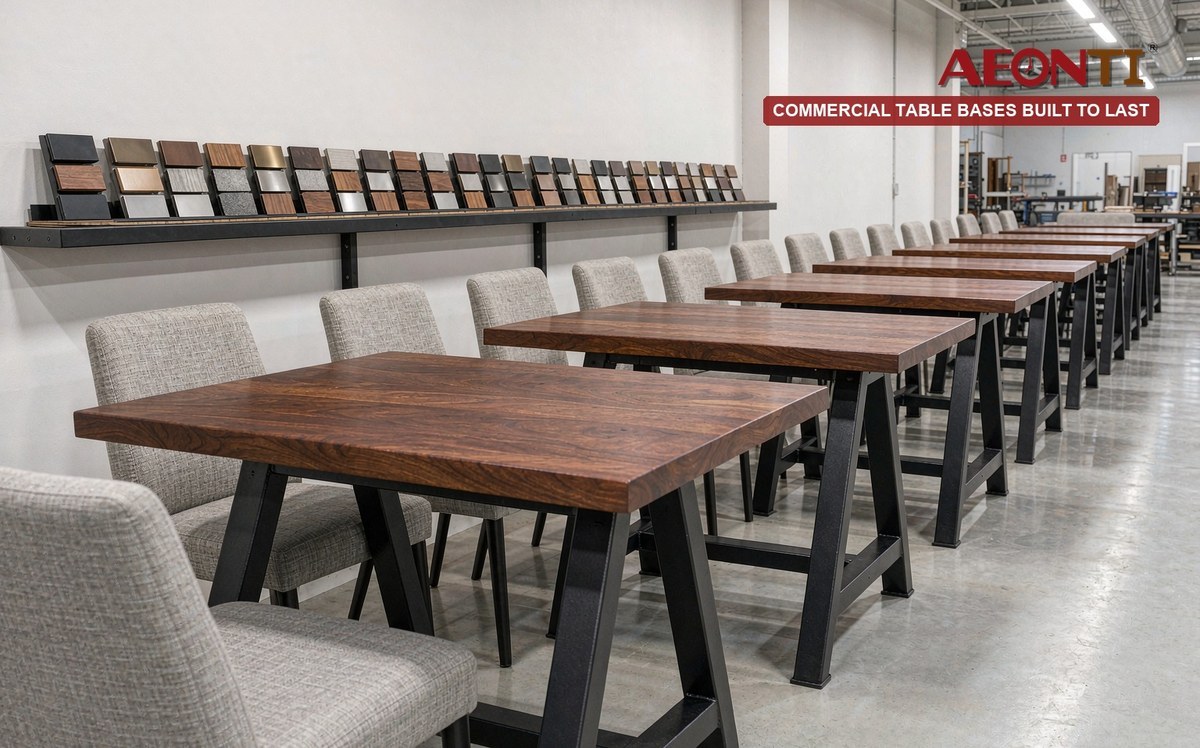
Restaurant tables are used every single day. Dozens, sometimes hundreds of uses a day is a continuous test for any table base. A home dining environment and a commercial hospitality environment are completely different.
A restaurant table base has to face frequent use, repeated cleaning, tables and chairs being moved constantly, guest impacts, different tabletop weights and long hours under load. So procurement cannot stop at, "How does it look today?" It should also ask, "What condition will it still be in after one year, two years, or longer?"
Ask about our wholesale table base programme for volume supply built around this reality.
7. The Finish Changes How a Restaurant Looks a Year Later
When a new table arrives, almost every product looks good. The real difference appears after long-term use: paint begins to chip, metal picks up scratches, rust appears in humid spaces, and cleaning agents gradually change the surface.
None of these problems show up on purchase day. But for a commercial project, the quality of the surface treatment directly determines long-term appearance. So when sourcing a table base, do not stop at "Which colours are available?" Also ask, "What environment is this finish designed for?" Powder coating, brushed metal and plating each behave differently in a busy restaurant, a coastal patio or a hotel breakfast room.
| Finish on the table base | Best suited to | Watch out for |
|---|---|---|
| Powder-coated black | Busy restaurants and cafés using a cast iron table base | Chips at knocked foot edges |
| Brushed stainless steel | Hotel lounges and premium dining rooms | Finger marks without regular care |
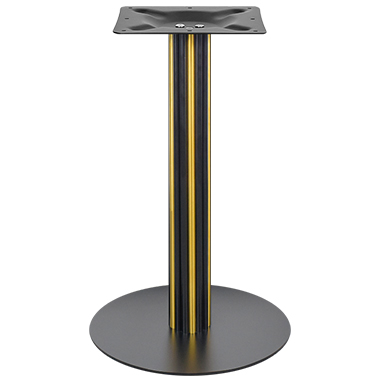
| Bronze / chrome plating | Design-led interiors and showrooms | Coastal humidity if not specified |
| Outdoor-grade coating | Patio table systems and rooftop bars | UV and rain without proper rating |
8. The Best Dining Table Is the One Nobody Complains About
This is the standard we hold for commercial furniture. Guests may not remember the material of the table base, the model number, the tube size or the process used on the foot. But they absolutely remember whether the restaurant was comfortable to sit in.
What they register instead is a list of feelings — all shaped, quietly, by the restaurant furniture set you choose.
9. When Sourcing Tables, Look Beyond the Tabletop
If you are buying dining tables for a restaurant, café, hotel or commercial project, start with these seven questions rather than a price comparison:
10. For B2B Buyers, the Base Is the Hidden Core of Table Sourcing
Many people choose the tabletop first. But for wholesalers, distributors and hospitality projects, the right table base often determines whether a table ends up stable, comfortable, durable and adaptable to different commercial settings.
That is why we recommend involving the base from the very start when developing a new dining-table collection — not treating it as the last item on the list. A good table base does far more than hold up a tabletop. It influences stability, comfort, space efficiency, product life and the final landed cost. Explore our solutions for contractors and design firms to see how early base selection changes a project.
Start With Three Matches
AEONTI manufactures commercial table bases and dining tables for wholesalers, distributors, furniture brands and restaurant or hotel projects. Tell us your tabletop size, target price, usage scenario, order quantity, material, finish and OEM / ODM needs — we will recommend a matching table base solution without asking you to browse hundreds of products first.
Useful starting points include our wholesale table bases, OEM / ODM customisation, fine dining table systems, café table systems, outdoor patio solutions, project solutions, the online design tool and our tabletops. You can also request a quote, message us on WhatsApp at +86 178 4135 3079, email aeonti@aeonti.com, or visit www.aeonti.com.
Your next dining table may not need a more complicated design — just a truly suitable table base.