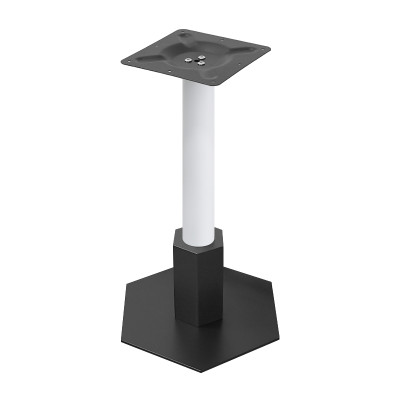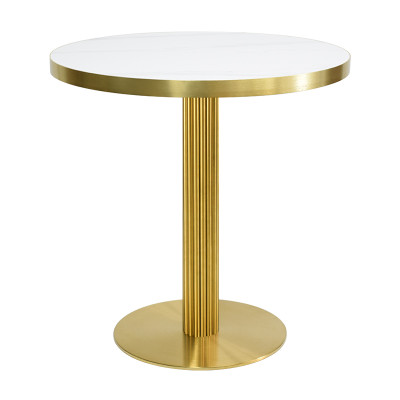
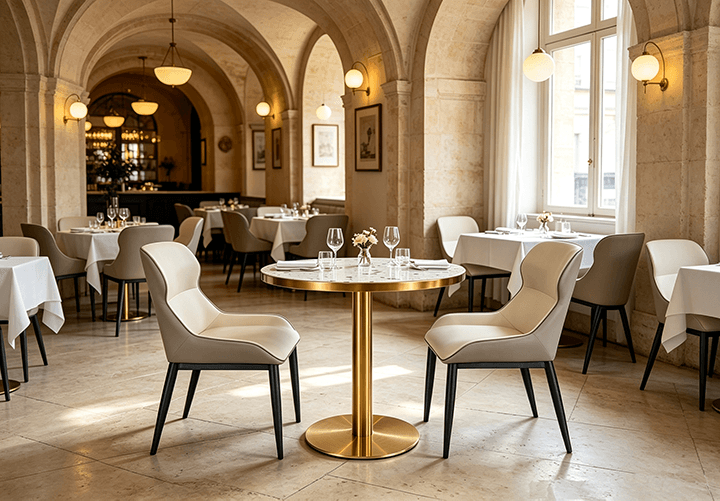
What Affects Commercial Table Base Prices? 8 Key Factors B2B Buyers Must Know Commercial table base in a modern restaurant setting
If you are sourcing Commercial Table Bases for restaurants, hotels, cafés, bars, furniture distributors, or commercial projects, you have probably noticed a very common problem:
Why do quotes for table bases differ so much from supplier to supplier?
Even when two products look almost identical, their prices can differ noticeably. The reason is that the price of a commercial table base is not determined by the "base" alone — it is also affected by material, size, structure, steel thickness, surface finish, customization requirements, order quantity, packaging, and shipping method.
For B2B buyers, the real question is not "which factory gives the lowest quote," but:
Does the specification, quality, and long-term value behind that price make sense?
This article walks you through the 8 main factors that affect commercial table base pricing and helps you understand how to compare quotes from different suppliers — and how to control procurement costs without sacrificing quality.
How Much Does a Commercial Table Base Cost?
There is no fixed, one-size-fits-all price for commercial table bases.
Prices can vary significantly depending on:
Material
Table base size
Structural design
Steel thickness and product weight
Surface finish
OEM/ODM customization
Order quantity
Packaging and shipping
For example, a standard mild steel base and a custom base made of stainless steel with a reinforced structure and a special surface finish naturally have very different manufacturing costs.
So when comparing Commercial Table Base Price, we do not recommend comparing single-unit quotes alone. Instead, compare the product specifications and the services each supplier provides at the same time.
In general, commercial table base prices are affected by the following factors:
| Factor | Lower Cost | Higher Cost |
| Material | Mild steel | 304 stainless steel / special materials |
| Structure | Simple single-column design | Multi-column / heavy-duty structure |
| Size | Small size | Large size |
Steel thickness | Standard thickness | Thickened material |
Surface finish | Standard powder coating | Custom colors / premium finishes |
Customization | Standard product | OEM/ODM |
Quantity | Small batch | Large volume / long-term purchasing |
Packaging | Standard packaging | Custom export packaging |
So if you are looking for a Commercial Table Base Manufacturer, it is best to provide the supplier with your complete procurement requirements to get a more accurate quote.
8 Key Factors That Affect Commercial Table Base Prices
1. Material Is a Major Price Factor
Material is usually one of the most fundamental factors affecting commercial table base prices.
Common materials used for commercial table bases today include:
Stainless steel
Cast iron
Iron
Aluminum alloy
Iron stamping
Different materials have different costs, weights, strength, corrosion resistance, and machining difficulty.
Stainless steel bases are typically suitable for:
High-end restaurants
Hotels
Cafés
Outdoor commercial dining
Projects with high corrosion-resistance requirements
Stainless steel raw material and processing costs are usually higher than ordinary steel, so the price may also be higher.
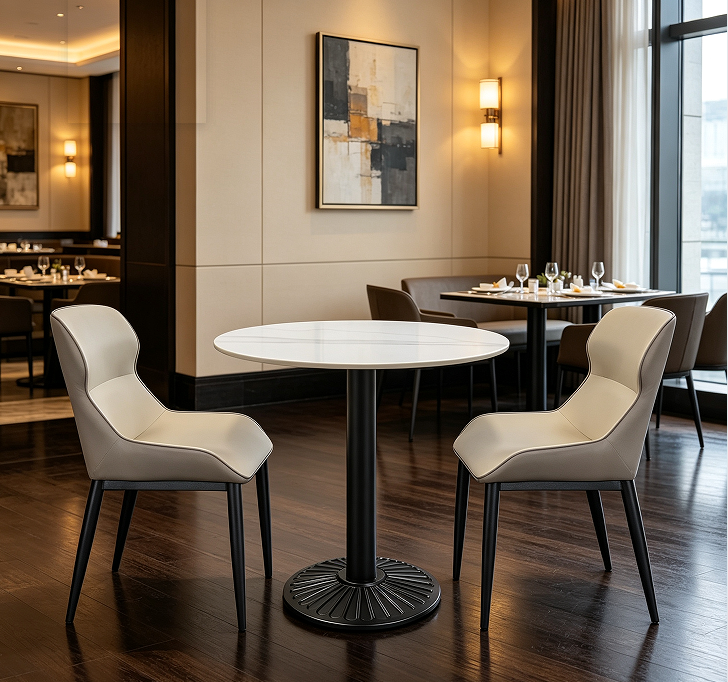
Cast Iron Table Bases
Cast iron offers good weight and stability, making it suitable for:
Restaurants
Bars
Hotels
Commercial dining tables
Large tabletops
For commercial tables that require high stability, cast iron bases are a common choice.
Iron bases offer good strength and cost advantages, making them a very common choice for commercial tables.
By varying the tube diameter, steel thickness, structure, and surface finish, manufacturers can produce commercial bases positioned at different price levels.
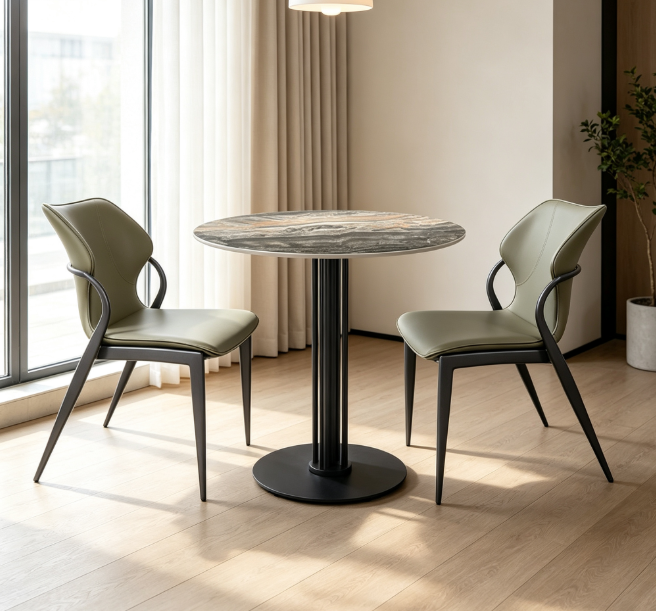
Aluminum alloy is lightweight and corrosion-resistant, making it well suited for:
Cafés
Outdoor restaurants
Patios
Commercial outdoor furniture
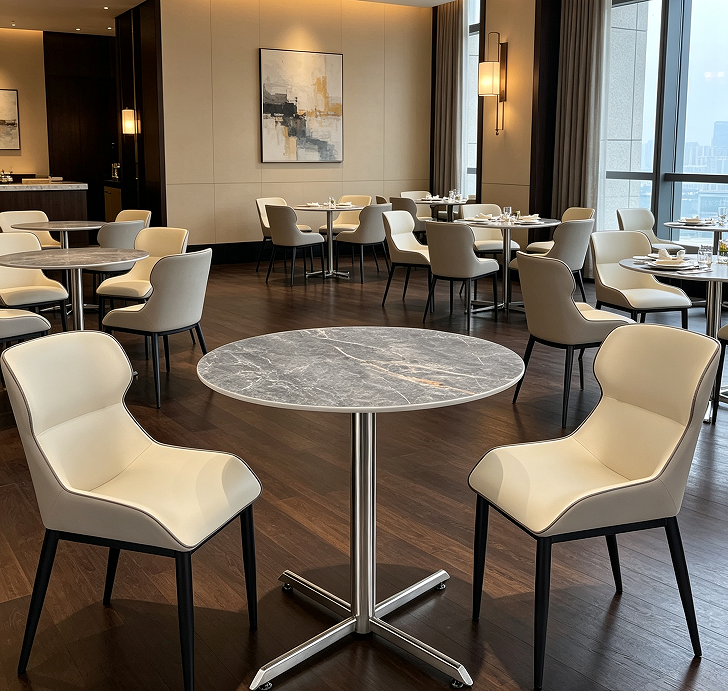
Pressed steel bases offer a solid structure, high strength, moderate weight, and outstanding cost-performance, making them suitable for:
Cafés
Indoor restaurants
Bistros
Commercial foodservice furniture
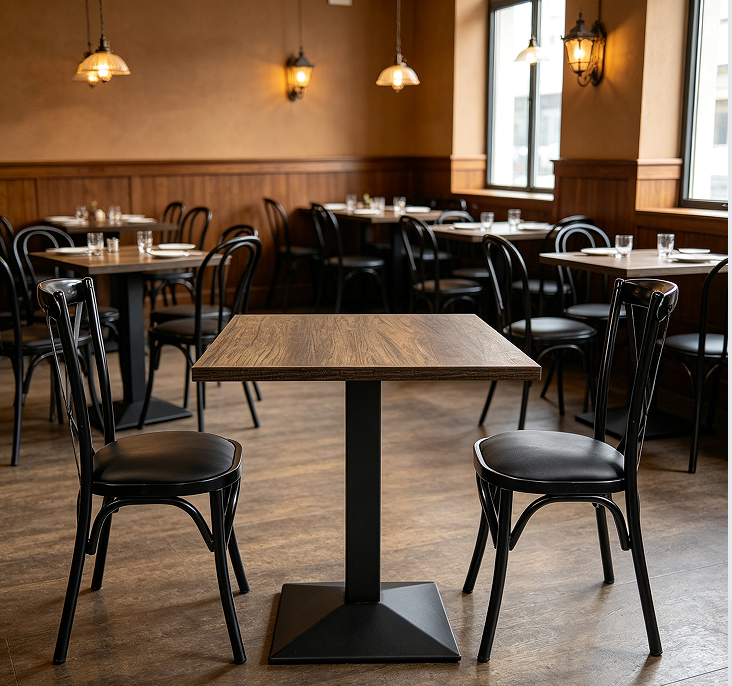
Therefore, buyers should not choose a material based on price alone — you also need to consider the actual usage environment.
Material price ≠ final procurement value. What matters more is choosing a material that matches your project's application scenario.
AEONTI: Your Commercial Table Base Manufacturing Partner
If you are looking for a reliable Commercial Table Base Manufacturer, AEONTI provides commercial table base solutions
tailored to the needs of different commercial projects.
AEONTI's product range covers multiple types of commercial bases, including:
Stainless steel bases
Aluminum alloy bases
Pressed steel (stamping) bases
Iron bases
Cast iron bases
Single-column bases
Double-column bases
Other custom commercial bases
AEONTI also supports OEM/ODM customization and bulk purchasing, and can match products and solutions according to
your:
Tabletop size, material, tabletop weight, tabletop height, usage scenario, quantity, and surface finish requirements.
2. Table Base Size and Specifications Affect Price
A bigger base is not necessarily better, but a larger structure usually means more material and higher manufacturing costs.
Size factors that affect price include:
Base plate diameter
Column height
Tube diameter
Top plate size
Material thickness
For example, a small round table may only need a compact single-column pedestal base, while a large rectangular commercial table may need a larger double-column structure or other reinforced structures.
So when sourcing, you need to consider together:
Tabletop size + tabletop weight + base size + load-bearing requirements
— not just the base price in isolation.
3. Structural Complexity of the Table Base
The structural design of the base directly affects manufacturing cost.
Common commercial table base structures include:
Round Pedestal Base
X Base
T Base
Double Column Base
Custom Table Base
Iron frame designs
The more complex the structure, the more it typically requires:
Components
Welding processes
Stamping or casting processes
Machining
Assembly
Quality inspection
For example, a simple single-column base and a base that requires multiple support points, reinforcement structures, and
special connectors can have completely different manufacturing processes and material consumption.
Therefore:
The more complex the base design, the higher the manufacturing cost is usually.
However, for commercial projects, complex structures can sometimes provide better stability, load capacity, and user
experience — so you should not judge product value by price alone.
4. Steel Thickness and Product Weight
This is a factor many B2B buyers overlook when comparing quotes.
Two bases that look very similar on the outside can differ significantly in material cost and product weight if they use different
steel thicknesses.
For example:
Standard steel thickness vs. thickened steel structure
...can differ in the following areas:
Material usage
Product weight
Load capacity
Stability
Manufacturing cost
So if Supplier A quotes lower than Supplier B, the first thing to confirm is:
Do both products use the same material thickness?
You should also compare:
Tube diameter
Base plate thickness
Top plate (tray) thickness
Base weight
Overall structure
Important reminder: Thicker is not always better. The right material thickness should be matched to your tabletop size +
tabletop weight + usage scenario + load requirements.
5. Surface Finish Also Affects Price
Commercial table bases need more than structural stability — surface finish also affects product cost.
Common surface finishes include:
Black powder coating
White powder coating
Custom colors
Matte
Glossy
Brushed
Polished
Electroplating
Other special finishes
For example, standard black powder coating is usually more suitable for bulk commercial projects, while custom colors,
special textures, or stainless steel brushing and polishing may require higher processing costs.
For restaurant and hotel projects, you also need to consider:
Corrosion resistance
Wear resistance
Ease of cleaning
Usage environment
Appearance consistency
Therefore, when requesting a quote, it is best to specify:
Material + Finish + Color
...instead of just telling the supplier:
"I need black table bases."
6. OEM/ODM Customization Affects Price
If you are purchasing standard products, the factory can usually produce them directly using existing molds and production
processes.
But if you need:
Special heights
Special sizes
Special tube diameters
Special bases
Special top plates
Special colors
Special structures
Logo printing
Exclusive packaging
New product development
...then the quote will usually change.
Custom projects may involve:
Engineering design → Sampling → Molds → Sample confirmation → Mass production
Therefore, the price of customized products cannot be simply compared with standard products.
If you need OEM/ODM, we recommend providing as much of the following as possible when requesting a quote:
Product drawings
Reference images
CAD files
Size requirements
Material requirements
Quantity
Surface finish requirements
The more complete the information, the easier it is for the factory to give an accurate quote.
7. Order Quantity and MOQ Affect Unit Price
For B2B purchasing, quantity is usually a very important price factor.
For example:
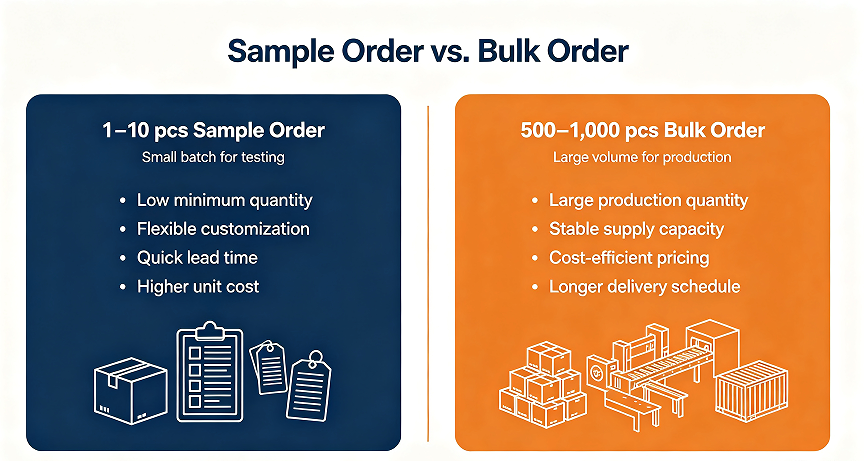
A 1–10 pcs sample order
vs. a 500–1,000 pcs bulk order
...have completely different production efficiency, material purchasing, packaging, and labor cost allocation.
In general, bulk purchasing can bring:
Lower unit material cost
Higher production efficiency
Lower per-unit packaging cost
Better production scheduling
Better shipping efficiency
So if you are purchasing Wholesale Table Bases or Bulk Commercial Table Bases, we recommend telling the factory your
estimated purchase quantity directly.
For example:
Sample: 2 pcs
Trial order: 100 pcs
Bulk order: 500 pcs
Annual demand: 5,000 pcs
This allows the factory to develop a more reasonable pricing plan based on your procurement scale.
8. Packaging, Shipping, and Sourcing Terms Affect the Final Cost
B2B buyers often compare only the Unit Price...
...but the real procurement cost should consider the Total Landed Cost, which is:
Product price + packaging costs + international shipping + duties/taxes + other import costs
For example:
| Supplier | Unit Price |
| Supplier A | $20/pc |
| Supplier B | $23/pc |
Supplier A looks cheaper at first glance.
But if Supplier A has poor packaging and higher shipping costs, while Supplier B offers more efficient export packaging and
shipping solutions, the final landed cost can be completely different.
So when comparing different Table Base Manufacturers, we recommend comparing at the same time:
Trade terms: EXW / FOB
Packaging method
Units per container
Unit volume
Product weight
Shipping method
Destination
Why the Cheapest Commercial Table Base Is Not Always the Best Choice
For commercial projects, the lowest unit price does not necessarily mean the lowest procurement cost.
If a product price seems too low, you may need to further confirm:
Is the material thickness sufficient?
Is the product weight reasonable?
Is the welding quality consistent?
Is the surface finish durable?
Does the load capacity meet the requirements?
Is the packaging suitable for international shipping?
How consistent are the products across bulk orders?
Can the supplier sustain supply?
For restaurants, hotels, and large commercial projects, table bases usually need to withstand long-term, high-frequency use.
So a smarter sourcing approach is:
Quality + Stability + Durability + Consistency + Price
...not simply:
Lowest Price
Looking for a Reliable Commercial Table Base Factory?
Get a Commercial Table Base Quote From AEONTI
If you are sourcing bases for restaurants, hotels, cafés, bars, furniture wholesalers, furniture distributors, or commercial
construction projects, feel free to send us your project requirements.
Please provide as much of the following as possible:
Tabletop size + tabletop material + tabletop weight + tabletop height + base style + material + surface finish + order
quantity + usage scenario
The AEONTI team can help you choose the right Commercial Table Base for your project, and provide support for standard
products, bulk purchasing, and OEM/ODM customization.
Not sure which base to choose?
Send us your project requirements and we will help you select the right one.
📞 WhatsApp: +86 17841353079
📧 Email: aeonti@aeonti.com
🌐 Website: www.aeonti.com