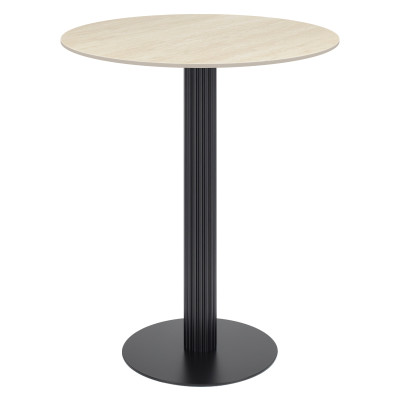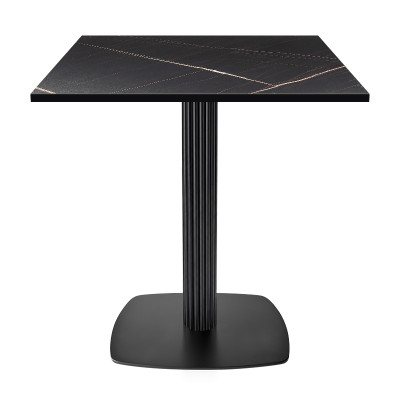
Cast Iron vs Ductile Iron Table Legs: A Buyer's Guide to Long-Term Durability in Commercial Settings
If you operate a busy restaurant, café, or hotel dining room, your table legs take more abuse than almost any other piece of furniture in the building. Cleaning carts bump them. Customers drag chairs into them. Staff stack chairs on tabletops at the end of service and accidentally knock legs against door frames. Over a 5-year replacement cycle, the alloy you choose for those legs will quietly decide how much you spend on maintenance, how often your dining floor is short a table, and how your venue looks two years in.
This guide compares cast iron and ductile iron for commercial table bases. It walks through the metallurgy in plain language, the five mechanical properties that matter for floor service, the restaurant scenarios that push each alloy to its limit, and a quick set of checks you can run on the sample your supplier sends. By the end, you should be able to read a material certificate, hold a sample leg, and pick the right alloy for your specific room without guessing.
1. Why Table Legs Break in Commercial Spaces (And Why the Alloy Matters)
Most table base failures on a busy dining floor are not dramatic. A leg does not shatter. It develops a hairline crack at the weld seam where the vertical column meets the foot plate. A chair catches that crack during a busy lunch service, and the leg folds inward. The table collapses, a guest is splashed, and you have a replacement order, a comp check, and a shift of downtime.
The reason this kind of failure happens so often is that commercial table legs live in a low-cycle, high-impact world. They are not loaded to their static capacity — most restaurant tables sit well below the rated weight of the leg. What kills them is sudden sideways force: a vacuum cleaner hitting the foot, a chair leg scraping the column, a delivery cart grazing the corner.
This is where cast iron and ductile iron diverge sharply. Both are iron alloys with similar appearance and similar density. Both can be cast into ornate shapes for traditional dining rooms. But under sideways impact, one bends and one breaks. The rest of this article is about understanding why, and which one matches your room.
2. The Metallurgy, in Plain Language
You do not need a materials engineering degree to choose between these two alloys. You need to understand the carbon, the graphite shape, and how each one behaves under sudden force.
2.1 Cast iron: the original iron alloy
Cast iron is the older of the two. It contains 2–4% carbon, which is far more than steel (typically below 1%). Most of that carbon exists as flake graphite dispersed throughout the iron matrix. Those flakes give cast iron its characteristic hardness and its excellent behavior under slow, compressive load — which is why cast iron has been used for engine blocks, machinery bases, and heavy pipe fittings for over a century.
The downside is also the graphite flakes. Under sudden sideways force, stress concentrates at the sharp tips of those flakes. The flakes act like tiny cracks already inside the metal. A hard impact lets those internal cracks propagate, and the part fails with very little warning and almost no visible deformation. Cast iron under sudden shock behaves more like ceramic than like steel: hard, strong in compression, brittle in tension and impact.
2.2 Ductile iron: the engineered upgrade
Ductile iron was developed in the 1940s and became widely commercial in the 1960s. The composition is similar to cast iron (still 2–4% carbon, still iron-based), but a small amount of magnesium is added to the molten metal just before casting. The magnesium changes the graphite from sharp flakes into round, nodular shapes — which is why ductile iron is sometimes called nodular cast iron.
Those round graphite nodules do not create the same stress concentration points. The iron matrix stays continuous around them. The result is an alloy that behaves much more like steel: it can deform, it can absorb energy, and under sudden impact it bends or dents instead of snapping. Ductile iron typically delivers 7× the elongation of gray cast iron before fracture, and roughly 2.5× the tensile strength.
2.3 Why this matters for a restaurant table leg
A freestanding dining table in a busy restaurant experiences hundreds of small impacts per week. Over 5 years that adds up to tens of thousands of low-energy shock events. Cast iron tolerates those events up to a point — but when one is too hard, or lands in the wrong spot, the leg fails with no warning. Ductile iron tolerates the same abuse with a much wider margin, because the metal itself can absorb the impact by deforming slightly.
3. The Five Properties That Actually Matter at the Table
Suppliers often quote material data sheets with ten or fifteen mechanical properties. For commercial table legs, only five matter in practice. The table below compares cast iron and ductile iron on those five, with the rough operating range you should expect from a reputable foundry.
| Property | Gray Cast Iron (GG20 / Class 25) | Ductile Iron (GGG40 / 65-45-12) | Why It Matters at the Table |
| Tensile strength | ~25,000 psi (170 MPa) | ~65,000 psi (450 MPa) | Resistance to pulling and bending forces. Higher means the leg will not crack if the table is dragged across an uneven floor. |
| Elongation at break | < 1% | 10–18% | How much the metal stretches before it fails. Below 1% the alloy behaves like ceramic; above 10% it behaves like steel. |
| Impact resistance (Charpy) | Low (typically < 5 J at room temperature) | High (typically 12–20 J at room temperature) | The single best predictor of how the leg survives a chair hit or a vacuum bump. |
Compressive strength | Very high (~100,000 psi) | Very high (~95,000 psi) | Both alloys handle the static downward load of a heavy table top. The difference here is small. |
Relative cost | Baseline | +20–30% | The material premium you pay up front for the ductile upgrade. |
Three of those five properties — tensile strength, elongation, and impact resistance — all favor ductile iron decisively. The fourth (compressive strength) is essentially a tie. The fifth (cost) is the only one that favors cast iron. For most commercial dining environments, that trade is worth it.
4. Which Alloy Fits Which Restaurant Scenario
The right alloy depends less on the brand of your chairs and more on how your room is actually used. The scenarios below are the ones we see most often from buyers specifying commercial table bases.
4.1 High-traffic fast casual and cafés
Seating turnover every 20–45 minutes, customers dragging chairs in and out aggressively, servers rushing trays past table corners. This is the environment where ductile iron pays back the fastest. The constant low-level impact accumulates fast against cast iron, and replacement labor is expensive in a high-volume room.
4.2 Bars, pubs, and lounges
Patrons lean sideways against tables. Glasses and bottles get knocked into legs. Cleaning crews move bar stools quickly at end of night. Ductile iron is the default here. The elongation means a hard lean does not snap the column; the leg may dent, but it stays standing.
4.3 School and university cafeterias
Students are harder on furniture than almost any other group. Backpacks get hooked on legs, chairs are dragged across floors, and tables get repositioned by hand. Ductile iron is essentially mandatory in this segment. We have seen school clients move from gray cast iron to ductile and report dramatic reductions in annual replacement orders.
4.4 Hotel banquet halls and fine dining
Tables are moved by trained staff, not by guests. The foot traffic is high but the impact is low. Gray cast iron is acceptable here and the cost saving is real. Many hotel brands specify cast iron for banquet tables and ductile iron only for lobby or lounge seating.
4.5 Outdoor fixed picnic tables and patio stations
Outdoor tables are typically bolted down or extremely heavy, so impact frequency is low. Cast iron is acceptable for fixed picnic tables, though corrosion resistance becomes a separate concern (a powder-coated ductile leg will outlast a powder-coated cast iron leg in coastal or poolside environments because the ductile matrix is more uniform under the coating).
4.6 Buffet stations and service counters
These pieces rarely move and bear heavy stationary loads (chafing dishes, plate stacks, sometimes 30–50 kg on a single column). Cast iron handles this well. The static compression case favors cast iron's brittleness, because the load is predictable and slow.
5. How to Tell Which Alloy You Are Getting
The fastest way to get burned on an iron table base order is to receive a quote for ductile iron and receive cast iron. Both alloys look almost identical when finished and powder-coated. Use the four checks below during sample evaluation.
5.1 The tap test
Hold the leg vertically by the top and tap the lower column with a metal spoon or a small wrench.
• Cast iron produces a high-pitched ringing sound, similar to a bell. The vibration decays slowly.
• Ductile iron produces a dull, shorter thud. The vibration dies almost immediately.
The difference is audible to anyone, even without musical training. It works because the flake graphite in cast iron rings like a tuning fork, while the nodular graphite in ductile iron absorbs the vibration.
5.2 The material certificate
Every reputable foundry issues a mill certificate or material certificate per heat. Ask your supplier for it. The certificate should state the alloy grade:
• GG20, GG25, Class 25, Class 30 → gray cast iron, with a tensile strength in the 25,000–30,000 psi range.
• GGG40, GGG50, 65-45-12, 80-55-06 → ductile iron, with tensile strengths from 60,000 to 80,000 psi.
If the supplier cannot produce a certificate naming the specific grade, the order is a higher risk than the metal alone would suggest.
5.3 The visible fracture (destructive test, optional)
If you are evaluating two competing samples and want a definitive answer, ask the supplier to cut or break a small coupon from the sprue. Ductile iron fractures with a dark gray, slightly ductile surface. Gray cast iron fractures with a lighter, crystalline, faceted surface. This is a destructive test, so do it on the sample leg, not on the production batch.
5.4 The third-party spectrometer check
For large or recurring orders, you can request a Positive Material Identification (PMI) test from a third-party inspection agency. The inspector grinds a small area of the leg and runs a portable XRF analyzer to verify the alloy composition on the spot. This is the gold standard, and most overseas foundries will accept it as a standard purchase order term.
6. The Four Other Variables That Decide 5-Year Service Life
Alloy is the biggest variable, but it is not the only one. Even a ductile iron leg will fail early if any of the following four are wrong.
6.1 Foot glide material
The plastic or rubber glide under the foot plate is what actually contacts the floor. If the glide is missing or worn, the iron rubs directly against concrete or tile, and the column takes lateral shock every time the table is moved. Specify felt glides for wood floors, rubber glides for tile, and replaceable threaded glides (not pressed-in plastic) for high-turnover rooms.
6.2 Floor surface
Concrete and stone amplify impact. Vinyl and wood absorb it. A ductile iron leg on bare concrete will still take more punishment than the same leg on a sprung wood floor. For warehouses, event halls, and outdoor patios, consider thicker foot plates with wider glides.
6.3 Humidity and coastal exposure
Both alloys rust if the powder coating is breached. Ductile iron is marginally more uniform under the coating and tends to resist underfilm corrosion slightly better, but neither alloy tolerates standing water. For outdoor or coastal venues, specify a marine-grade powder coat and inspect welds at the column-foot junction once a year.
6.4 Cleaning chemistry
Strong acids or chlorinated cleaners will attack powder-coated iron over time. If your venue uses bleach-based sanitizers on tables, wipe the legs down with a damp cloth and neutral cleaner instead. This is a small operational change that doubles the practical life of the finish.
7. Is the 20–30% Premium for Ductile Iron Worth It?
The honest answer is: it depends on your 5-year replacement cost, which depends on your room. The simple model below uses round numbers from typical North American commercial operations.
| Cost Line | Gray Cast Iron Spec | Ductile Iron Spec | |
| Material cost per leg (wholesale, 100-set MOQ) | $28 | $34 | |
| Material cost per leg (wholesale, 100-set MOQ) | ~8–10% per year | ~1–2% per year | |
| Replacement legs needed per 100 tables, over 5 years | ~45 legs | ~10 legs | |
Replacement leg cost over 5 years | $1,260 | $340 | |
Labor cost to swap legs (~$25 per swap, 100 tables) | $1,125 | $250 | |
Total 5-year cost (legs + labor, per 100 tables) | $2,385 | $590 | |
The 20–30% material premium turns into a 70–75% total cost saving once labor and downtime are counted. For chain operators running multi-site rollouts, the spread is even wider, because procurement can standardize on ductile iron and remove the alloy decision from each site.
For a hotel banquet hall with low impact, the math flips. Cast iron is acceptable, and the saving is worth taking.
8. Six Questions to Ask Your Supplier Before You Order
Whether you are buying 50 legs or 5,000, run through this list before signing a purchase order. A good foundry will answer all six without hesitation.
1.What is the alloy grade? Ask for the exact designation: GG20 / GG25 (cast iron) or GGG40 / GGG50 (ductile iron). Avoid vague answers like "iron" or "heavy-duty iron."
2.Can you send a mill certificate per heat? The certificate should name the foundry, the heat number, the alloy grade, and the test results.
3.What is your weld procedure for the column-to-foot joint? Look for pre-heating, post-weld stress relief, and a documented weld standard (AWS, ISO, or GB).
4.What is the powder-coating thickness and process? Outdoor or coastal use needs at least 80 microns of polyester or marine-grade powder, with proper pre-treatment.
5.Can I order samples in both alloys? A serious foundry will send two legs in two alloys for side-by-side evaluation. Compare the tap test, the weight feel, and the finish.
6.What is your replacement policy for broken-on-arrival legs? Most foundries will replace at no cost if the failure is clearly manufacturing-related. Get this in writing.
9. Frequently Asked Questions
9.1 Can I mix cast iron and ductile iron in the same dining room?
Yes. Many operators specify ductile iron for freestanding dining tables and cast iron for fixed booths or buffet stations. The alloys look identical when finished, so guests will not notice.
9.2 Does the powder-coating color hide the difference between the two alloys?
Yes. Once a leg is powder-coated, you cannot tell the alloys apart visually. The tap test and the material certificate are the only reliable ways to tell.
9.3 Is ductile iron heavier than cast iron?
No. The two alloys have very similar density (around 7.0–7.3 g/cm³). A ductile iron leg will weigh essentially the same as a cast iron leg of the same dimensions.
9.4 Will a ductile iron leg rust faster than a cast iron leg?
Under the same powder coat, ductile iron is at least as corrosion-resistant as cast iron. Both rely on the coating for corrosion protection. Ductile iron's more uniform matrix can actually perform slightly better under a coating breach.
9.5 Can I weld a broken ductile iron leg back together?
Yes, but it requires a nickel-based rod and pre-heating. Most operators replace rather than repair. Keep one or two spare legs per 50 tables in storage.
9.6 What about cast iron with a steel core, or hybrid constructions?
Hybrid cast iron/steel constructions exist. They add cost without adding much value for typical commercial dining rooms. A monolithic ductile iron leg is simpler to specify, source, and replace.
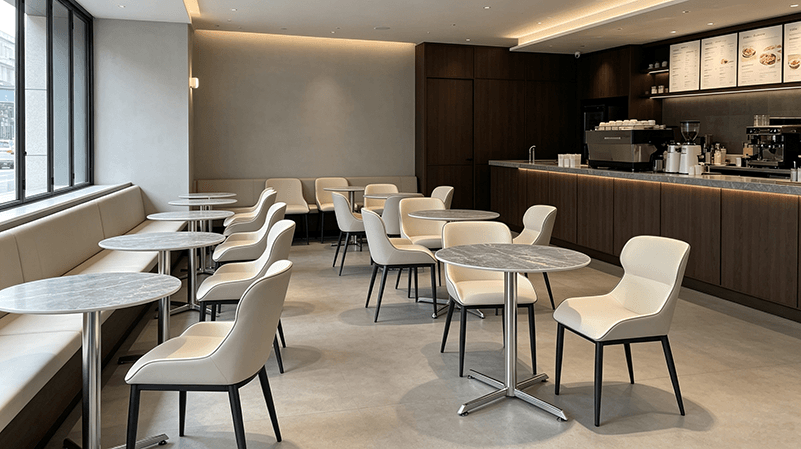
10. About AEONTI
AEONTI is a commercial table base and table top manufacturer based in Foshan, China, with an 8,000 m² production facility. We supply wholesale table bases, table tops, dining tables, and dining chairs to importers, project contractors, restaurant owners, and global brands across North America, Europe, the Middle East, and Australia.
For table bases, our standard freestanding dining table designs are produced in ductile iron as the default material — the upgrade that gives the best balance of impact resistance and cost for the typical commercial dining room. We also produce cast iron variants for fixed installations, banquet use, and project specifications that call for the traditional alloy. We do not market any of our legs as having official third-party load certification; we publish the alloy grade, the mill certificate, and the casting method instead, and we tell buyers what each spec actually does and does not cover. If a buyer needs an official load test report for their project, we work with third-party labs on request — that is the honest path.
Standard terms: MOQ 100 sets, 25–30 day lead time for stocked designs, sample orders welcome at the same MOQ, container consolidation (LCL mixed with other categories) available for mid-sized orders, and OEM / private label supported. Our table bases can be paired with our sintered stone, melamine, HPL, and solid wood table tops for a one-vendor package.
For samples of both alloys side by side, or for a quotation with the alloy grade specified on the line item, contact our sales team with your table size, expected seating turnover, and target market. We will recommend the alloy we believe fits the room and explain why.
Reach out to AEONTI — start with tables built to last.
📞 WhatsApp: +86 17841353079
📧 Email: aeonti@aeonti.com
🌐 Website: www.aeonti.com